The rebuilder
A difficult or complicated diagnosis, or a panel that came back wrong. You went home with a printout, a follow-up in six months, and no sense of control.
"I understood the diagnosis. Nobody told me what to do on Tuesday."
For about the cost of a copay.
PlusYears reads your labs, your history and your daily numbers, then tells you — every morning — the one change that would add the most healthy years. Not advice for people in general. Advice for you. Powered by AI.
15 days, everything switched on Nothing charged today Cancel any time
Who it's for
Four kinds of people find us. They arrive from different directions and want the same thing — to know where they actually stand, and what to do about it to improve their health and longevity.
A difficult or complicated diagnosis, or a panel that came back wrong. You went home with a printout, a follow-up in six months, and no sense of control.
"I understood the diagnosis. Nobody told me what to do on Tuesday."
Past fifty, feeling fine, and unwilling to leave the next thirty years to chance. You already track things — nothing turns the tracking into a decision.
"I have the data. I want to know what to do to improve it."
Fit already, and measuring all of it. What you're short of isn't data — it's the one thing that will actually move the needle this month.
"I have six apps collecting data. None of them looks across all of it and gives me a plan."
Running hard, and starting to notice what it costs. Energy, focus, recovery — the things that decide how the next ten years actually go.
"I'd love to live to a hundred. But, I need to know what to do to be at my best right now."
Nothing charged today
What changes
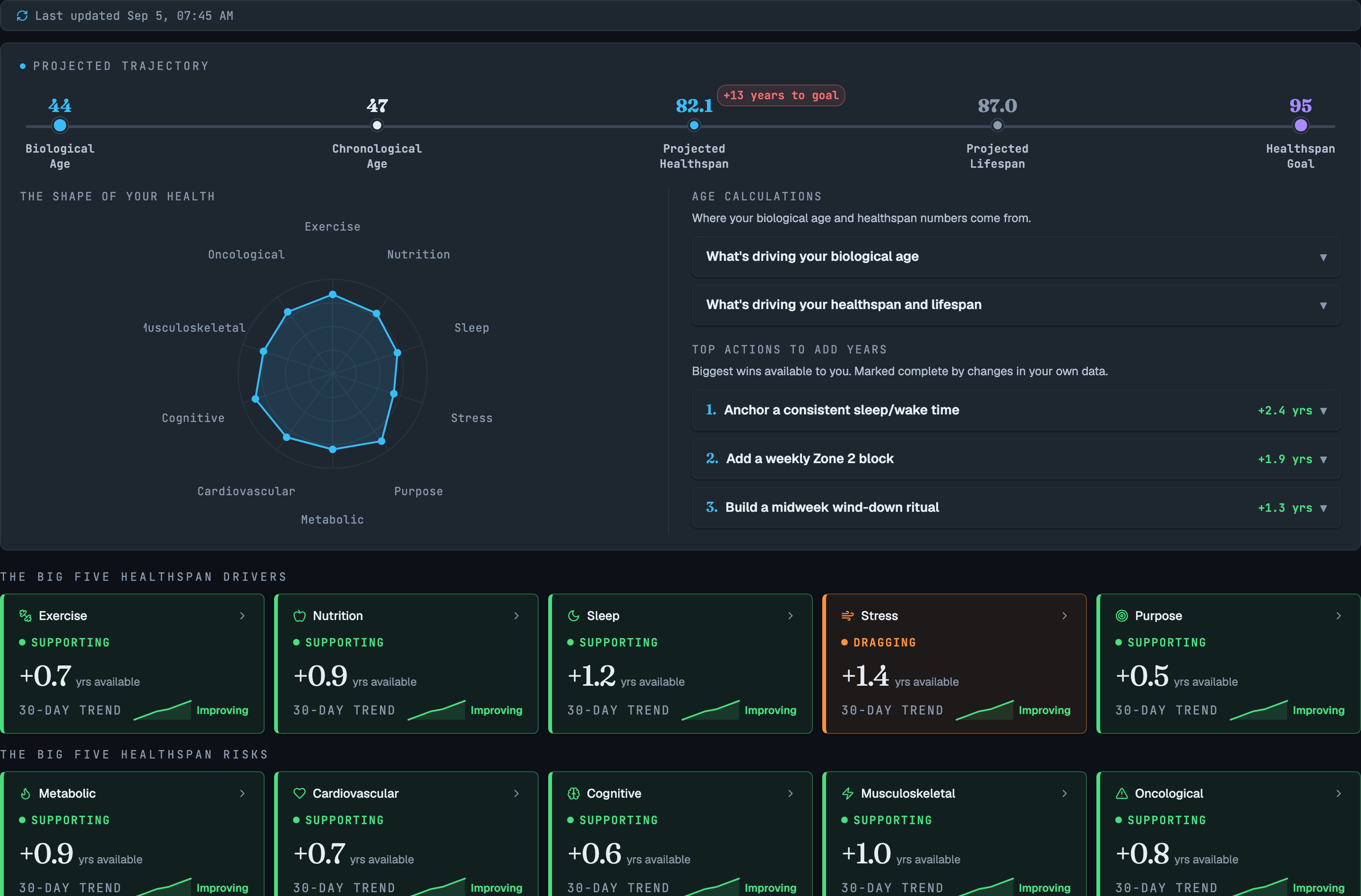
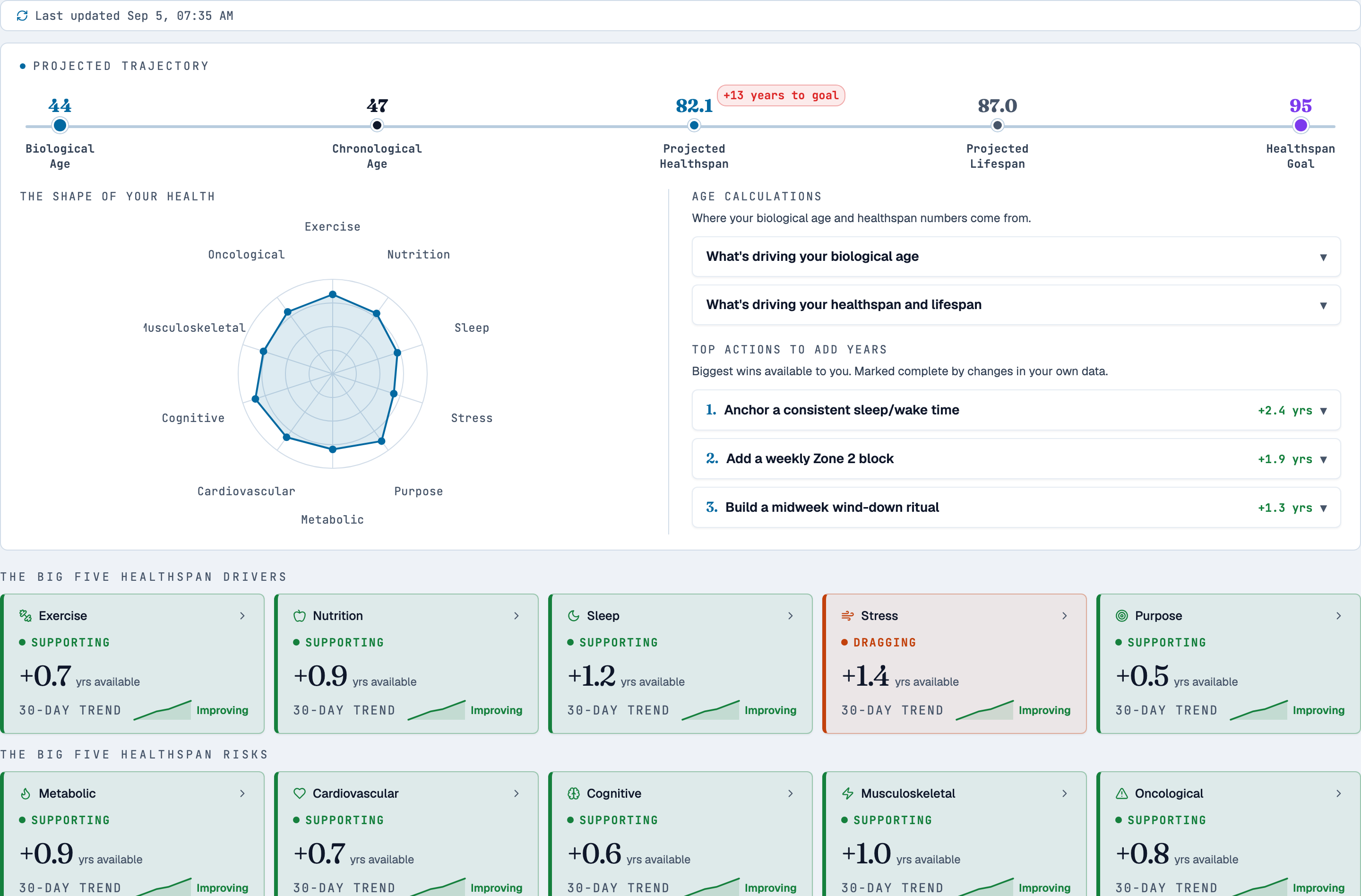
Your biological age, your projected healthspan, and how far both sit from the age you'd like to reach. Recomputed whenever your data changes — not a score you're given once and never see move.
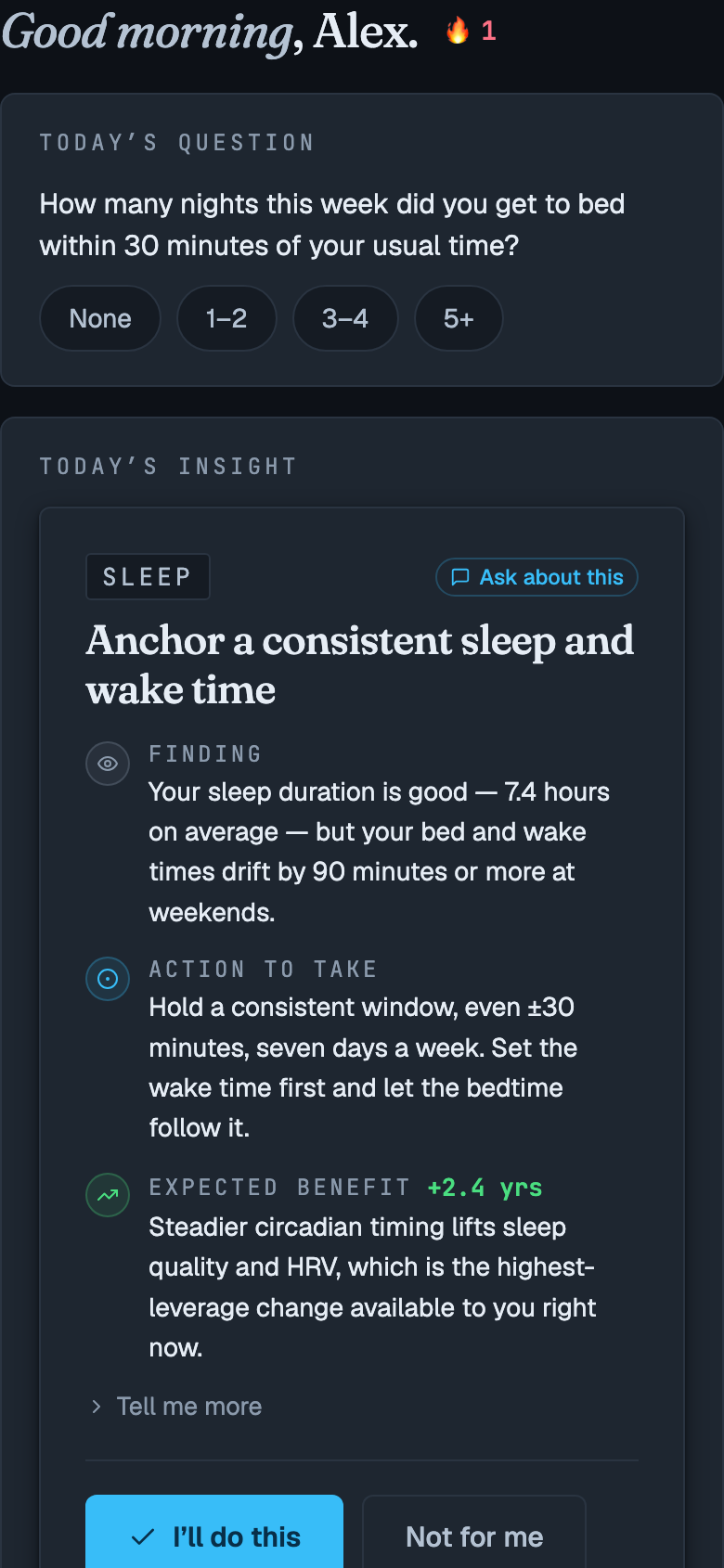
Not a list of forty habits. Every morning, the single highest-leverage change available to you right now, why it's that one, and the healthy years it's estimated to be worth.
Fifteen minutes with a doctor goes further when you arrive with your history summarised, your questions written down and the change since last time already laid out.
How it works
Everything a good longevity doctor would do with your file — read all of it, weigh it against current research, and tell you what actually matters — running every night while you sleep.
Step one
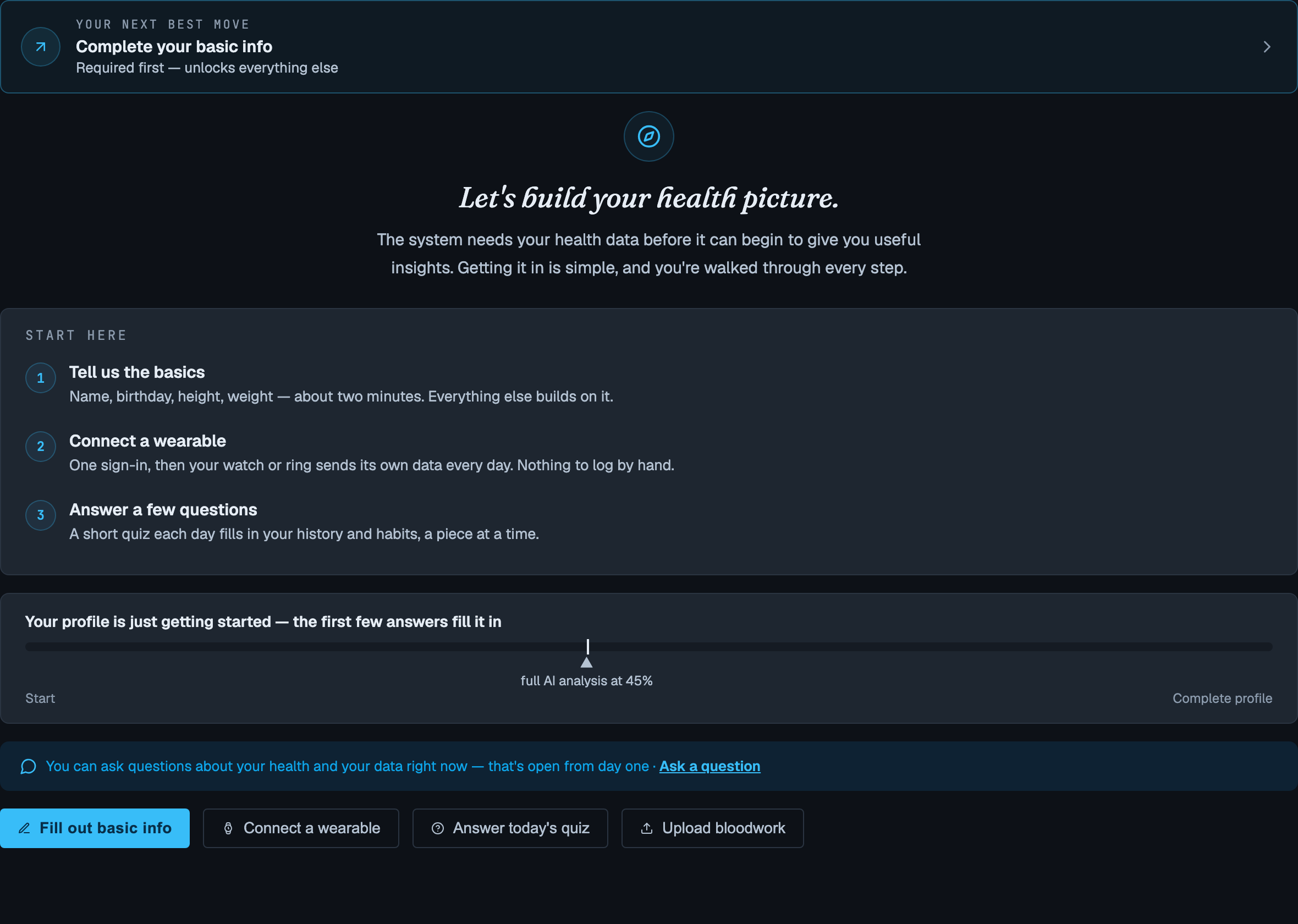
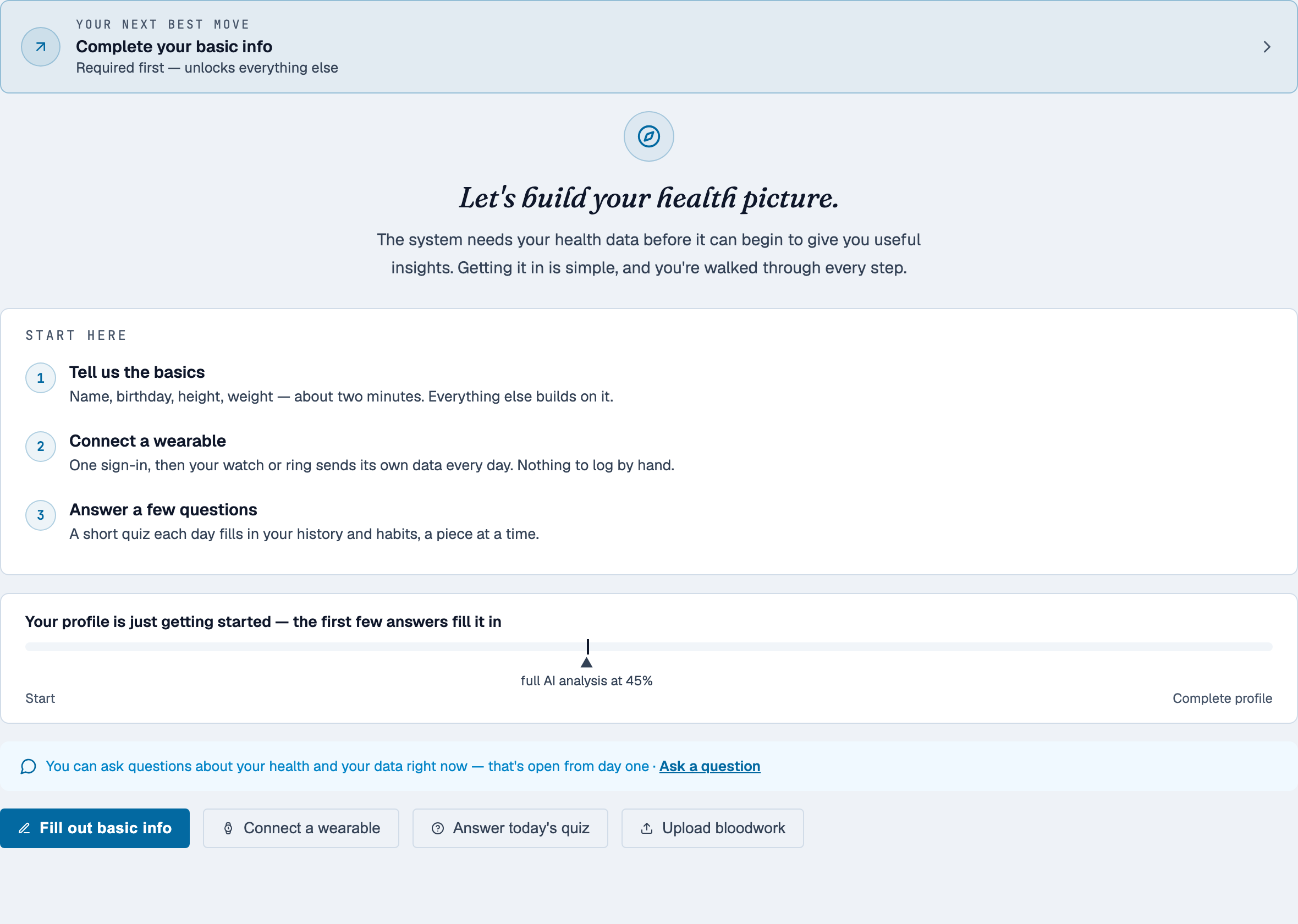
Ten minutes to start: your age, your history, what you're managing, how far you'd like to get. Then hand it whatever you already have — connect a watch or a ring, upload a lab PDF, photograph a report that only ever came on paper.
You don't need all of it on day one. The picture sharpens as you add things, and it tells you which gap is worth filling next.
Step two
While you're asleep, the whole record is graded across ten areas — exercise, nutrition, sleep, stress, purpose, and the five that carry the most risk. Each one comes back with a score, the reasoning behind it, and the healthy years still available in it.
Nothing here is a stock chart. Every figure on the screen is computed from your own numbers, and every one of them can be opened up to see why.
Step three
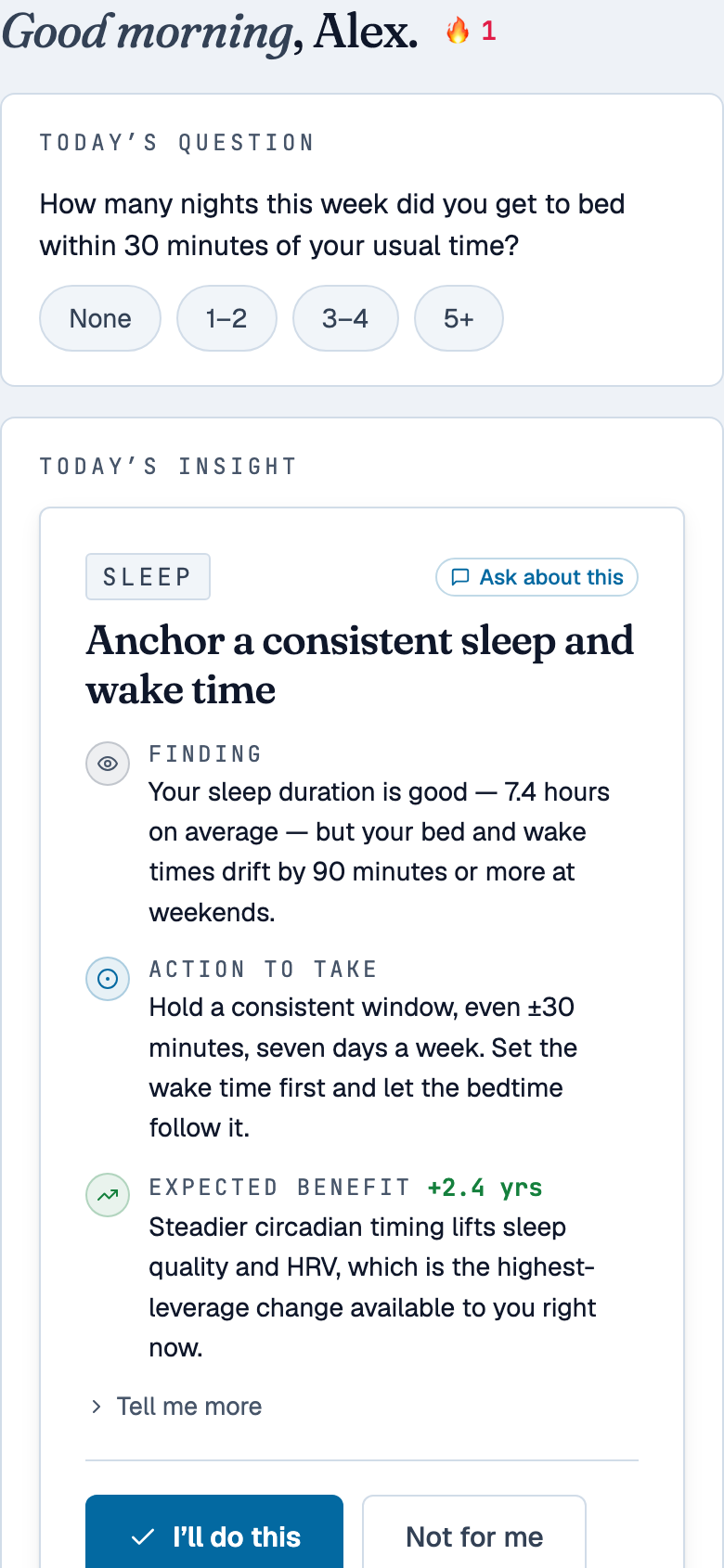
In the morning there's a single insight waiting: what it found, what to do about it, and what it's worth in healthy years. You say you'll do it, or you say it isn't for you — and tomorrow's is chosen knowing that.
And when you want more than a headline, ask. It answers against your whole record, not the internet's general opinion, and it will tell you plainly when something is a question for your doctor.
Step four
Knowing is the easy half. The rest of the product is built for the part where you actually do something about it — and for remembering what you did.
Why it's different
"A health expert in your pocket."
Most health apps show you your data back. This one has an opinion about it, and can defend it.
Not your age bracket, not the average of everyone on the platform. Your labs, your history, your last thirty days.
Longevity evidence moves. The analysis can search current literature rather than working from whatever was true when the app was written.
Every score opens into the factors behind it, weighted, with your own values next to each one. Nothing is a black box you're asked to trust.
It is not a doctor and never pretends to be. When something needs a clinician, it says so — and helps you get ready for that conversation.
Pricing
Pick a plan, use it free for fifteen days with everything switched on, and your card gets charged only if you stay. If it isn't giving you truly valuable insights about your health, walk away.
A month of PlusYears costs about what one copay does.
The whole product, every day.
after your free 15 days
For people who want it working harder.
after your free 15 days
Your record is locked to your account in the database itself — a request for somebody else's is refused before any of our code runs. It is never sold, and there is no advertising and no data broker anywhere near it. You are the customer here, not the product.
If you cancel or a trial lapses, everything stays exactly as you left it for 90 days so you can pick up where you stopped. After that it is deleted. You can also delete it all yourself, at any point, without asking anybody.
Questions
No. You add a card at the end of signing up, which is what starts the fifteen days, and nothing is taken until they're up. Cancel before then and you're never billed.
The same thing that happens if a trial simply runs out. Everything you added is still there — your labs, your history, your notes and every insight you were given. What stops is the new work: no nightly refresh, no new insights, no questions. Any connected watch or ring is unlinked, so nothing is being collected and nothing is being billed. Subscribe again within 90 days and it picks up exactly where it left off.
After 90 days we delete it for you, automatically — you don't have to ask and you don't have to remember. If you'd rather not wait, you can delete everything yourself at any point before that.
No. PlusYears is not a doctor, does not diagnose, and does not replace your medical team. It reads what you give it, uses AI to do research, explains what it sees, and helps you arrive at a medical appointment better prepared. When something needs a clinician, it says so.
The subscription, and nothing else. We don't sell supplements, devices or tests, we take no commission on anything, and no clinician pays to appear when you search for a doctor. We don't sell your data. There is no second revenue stream for the advice to be quietly serving — which is the only way we know to be worth trusting on what you should actually do.
No. You can start with nothing but the questions it asks you, and the picture sharpens as you add more. It will tell you which missing piece would make the biggest difference next, so you're never guessing about what to do first.
You. Every row is keyed to your account inside the database, so a request for anybody else's record is refused by the database rather than by application code that could have a bug in it. It is not sold, and never touched by an advertiser or a data broker. You can delete all of it at any time, including after you've cancelled.
Then the question changes from "what's wrong" to "what's left" — and that's the harder one to answer alone. The score shows how many healthy years are still available in each area, which is usually more than people expect and rarely where they expect.
Fifteen days, everything switched on, nothing charged today. If it isn't telling you something you didn't know by the end of the first week, walk away.
15 days free Cancel any time Your data stays yours